Estonian scientist helps CERN develop next-generation particle accelerator in Geneva
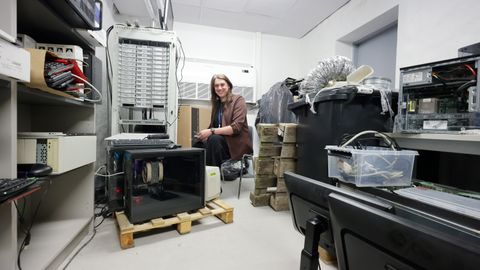
An Estonian scientist is involved in CERN's next-generation particle accelerator project near Geneva. CERN is located half in Switzerland and half in France, and its 27-kilometre ring accelerator propels particles to nearly the speed of light.
ТехнологииAn Estonian scientist is engaged in CERN's ambitious project to create a next-generation particle accelerator – a new phase of one of the world's most powerful scientific research facilities. CERN is located near Geneva, in a 27-kilometre circular tunnel running half beneath Switzerland and half beneath France, where particles are currently accelerated to nearly the speed of light.
Estonia's contribution to global science
The participation of Estonian scientists in such a world-class project is a significant recognition of Estonia's scientific capability. Development of next-generation accelerators is among the most complex engineering and physics challenges that scientists face today. The new accelerators must surpass the current Large Hadron Collider (LHC) parameters in both energy efficiency and thrust.
What the new accelerator means
CERN's next-generation project will help scientists better understand the fundamental building blocks of the universe and how particles behave at extremely high energy levels. The new accelerator is expected to discover phenomena that current equipment cannot detect, including possible new particles that could explain the nature of dark matter and dark energy. The involvement of an Estonian scientist in this project demonstrates that our small nation's scientific community can contribute to the world's greatest scientific endeavours.
Открыть в приложении →