Lithuania eyes nuclear deterrence as US troop withdrawal looms
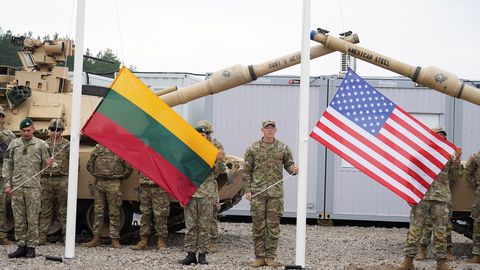
Lithuania is debating the possibility of hosting nuclear capabilities in the region amid uncertainty over continued US military presence in Europe. The discussion follows contradictory signals from Washington about American troop deployments. Lithuanians are weighing whether nuclear deterrence would be worth the risks and costs.
ПолитикаLithuania is grappling with a stark strategic dilemma: as the United States sends mixed signals about maintaining its military presence in Europe, Lithuanian officials and analysts are openly discussing whether nuclear deterrence capabilities should be deployed to the Baltic region.
The debate has been captured in a bittersweet local joke now circulating in Lithuania — "one hand takes, the other gives" — reflecting the contradictory nature of current US policy signals. On one hand, Washington has floated the possibility of drawing down American troops from Europe, including Lithuania. On the other, discussions about placing nuclear capabilities in the region have gained momentum, leaving many Lithuanians uncertain about what their security future actually looks like.
A Region on Edge
For the Baltic states, which share borders with Russia and Belarus, the question of credible military deterrence is not abstract — it is existential. Lithuania's NATO membership has long been the cornerstone of its security doctrine, with the physical presence of allied troops serving as the most visible guarantee against aggression. Any reduction of that presence therefore triggers serious alarm.
The nuclear deterrence debate adds a layer of complexity. While some argue that positioning nuclear assets closer to Russia's borders would strengthen the overall NATO deterrent posture, others warn that such a move could dramatically escalate regional tensions and draw Lithuania deeper into a dangerous geopolitical confrontation.
Worth the Risk?
Critics of the nuclear option point out that Lithuania would not gain independent control over any such weapons — they would remain under NATO and ultimately US command — meaning the country would bear the political and security risks without gaining genuine strategic autonomy. Proponents counter that the visible presence of nuclear deterrence infrastructure might compensate for a reduced conventional troop footprint.
As Washington continues to send contradictory signals, Lithuania and its Baltic neighbors face an uncomfortable reality: they must plan for multiple futures simultaneously, including one in which American security guarantees are less reliable than they once seemed.
Открыть в приложении →